
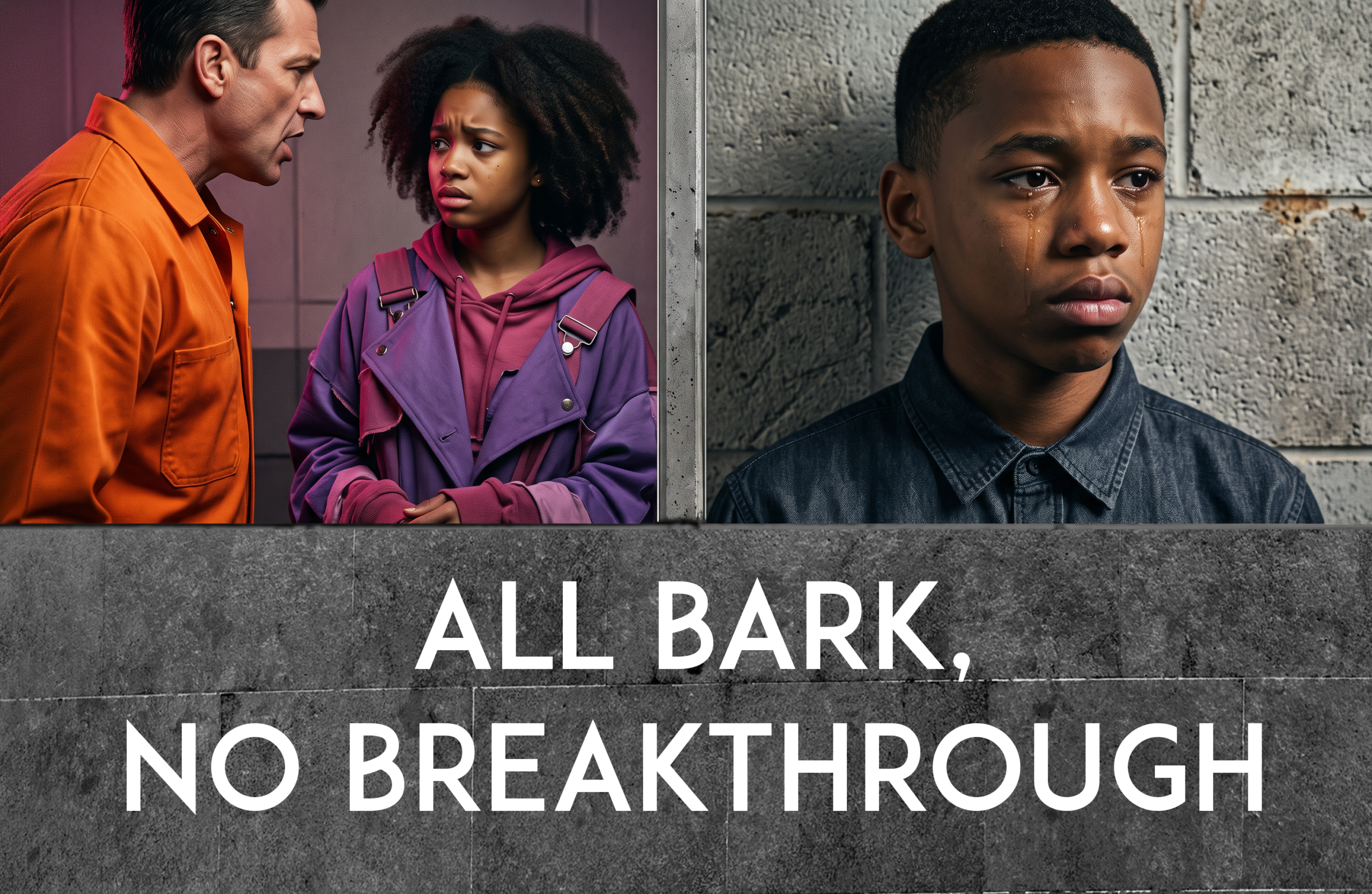
Scared Straight starts with an idea that sounds simple enough: give teenagers a frightening look at life behind bars, and they will think twice about breaking the law. A&E brought that approach to reality TV with Beyond Scared Straight, which premiered on Thursday, January 13, 2011, at 10 p.m. Eastern and Pacific. The series launched with a 90-minute premiere, followed by hour-long episodes (Rosky, 2010). Presented as unscripted television, it followed young people through jail and prison visits where inmates used intimidation, personal stories, and tough conversations to discourage crime (Rosky, 2010; Ross, 2011). Families wanted a turning point, and the show offered one with plenty of shouting. By the end of a visit, a teenager might be crying, apologizing, or promising to change. It made compelling television. Whether it made effective crime prevention is a separate question.
I get the appeal. I love the idea of making consequences real before a teenager makes a decision that cannot easily be undone. Prison becomes an actual place with actual people, rather than something that happens to somebody else. The idea rests on deterrence: make the consequences seem serious enough, and people will avoid the behavior that could lead to them. Klenowski et al. (2010) explain that these tough approaches have attracted broad public and political support. That popularity makes sense. For a worried family, a dramatic wake-up call can sound more promising than another conversation that goes nowhere. The problem is expecting that wake-up call to handle everything that comes afterward. One prison visit is being handed an awfully ambitious job description. Before calling it a solution, there needs to be evidence that it does the job. A strong sales pitch still needs receipts.

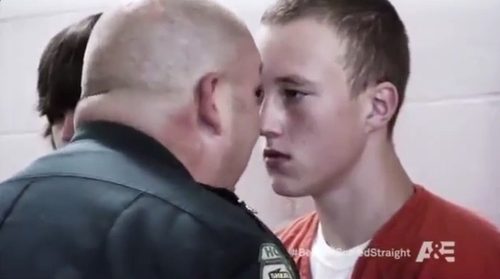
Image 1: Screenshot from Beyond Scared Straight, “A Family’s Loss” (A&E), sourced from Beyond Scared Straight Wiki on Fandom. Image 2: Screenshot from Beyond Scared Straight, “Floyd County, GA” (A&E), sourced from Beyond Scared Straight Wiki on Fandom.
The Receipts Are In
Those receipts tell a troubling story. Petrosino et al. (2013) reviewed nine studies involving 946 young people. Their combined analysis of seven studies found higher odds of later offending among program participants than among young people who did not attend. The finding went beyond simply failing to show improvement: the programs studied increased the odds of the behavior they were supposed to prevent. There are limits to that conclusion. The studies examined Scared Straight and similar interventions, rather than directly testing the television series, and the research covered programs studied between 1967 and 1992. Those details matter when discussing newer versions. They do not make the central finding disappear. Increased offending is a serious problem for an intervention whose entire selling point is preventing crime.
A teenager’s tearful promise can still be sincere. Someone might leave a prison visit frightened, regretful, and ready for a fresh start. The issue is what that reaction actually demonstrates. Feeling different that afternoon does not establish that the program changed behavior over the following months. Lilienfeld (2007) argues that interventions need to be examined for possible harm, even when their purpose is to help. Evaluating Scared Straight therefore requires more than collecting memorable reactions or following a few success stories. Researchers need to compare later outcomes with those of young people who did not receive the intervention. Some teenagers might improve without the visit, so improvement alone cannot establish that the program deserves the credit. The tears do not need to be fake for the conclusion to be shaky.
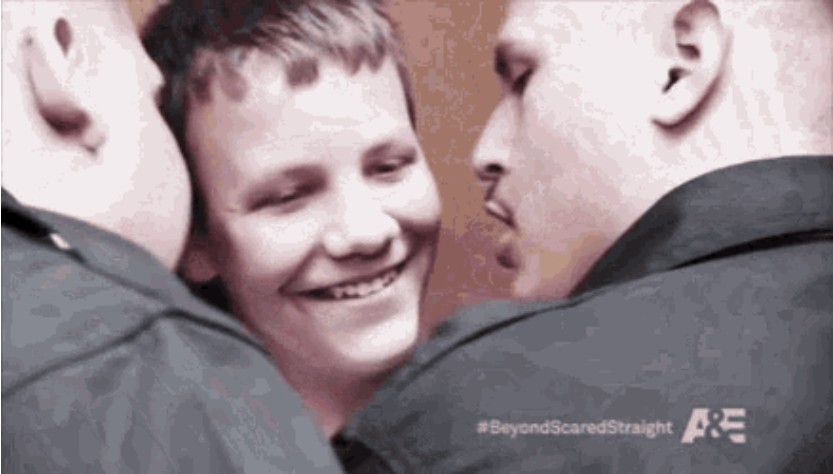
Image 3: Screenshot from a Beyond Scared Straight GIF uploaded by NobleDame via Tenor.
When Help Backfires
Good intentions do not control every lesson a teenager takes home. Adults may organize an intervention to discourage crime while the young people attending it reward each other’s risky behavior. Dishion et al. (1999) describe how peer approval can reinforce problem behavior in some group settings. Imagine a teenager telling a story about breaking rules and getting laughs, attention, or admiration from everyone nearby. That approval can encourage more of the same behavior. The adult sees a warning sign, but the group treats it like a highlight reel. This research did not directly evaluate Scared Straight, so it cannot establish why those programs produced worse outcomes. It offers a possible concern to investigate, rather than a confirmed explanation. Bringing teenagers together does not guarantee they will absorb the intended message. Sometimes, the message that earns applause carries more weight.
Turning down the shouting does not automatically solve the problem, either. Klenowski et al. (2010) concluded that confrontational programs did not work and suggested that nonconfrontational versions might show promise. A discussion about prison life could certainly offer a different experience from an afternoon of intimidation. But potential is not a passing grade. That suggestion also needs to be considered alongside Petrosino et al.’s (2013) later review, which found an overall harmful effect across the programs included in its combined analysis. The distinction between approaches deserves investigation, but a quieter visit still needs evidence that it prevents later offending. Lowering the volume can change the experience. Whether it changes the outcome is something research has to establish.
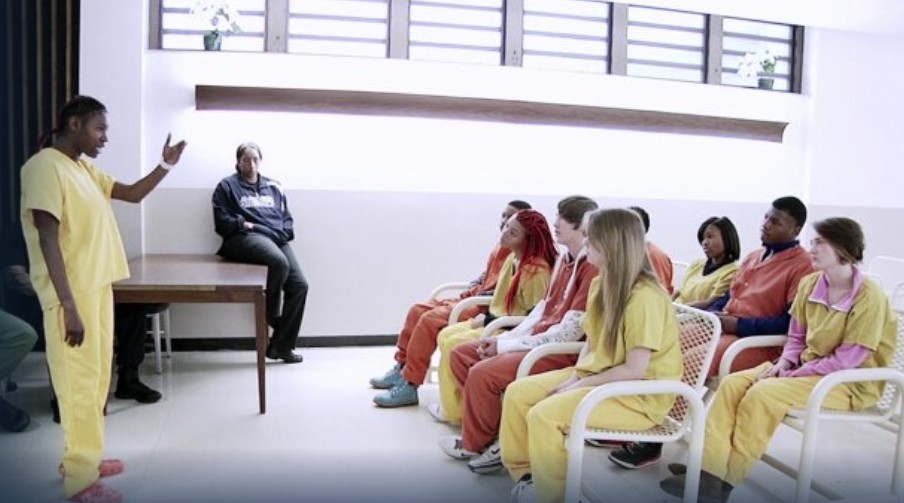
Image 4: Banner image for Beyond Scared Straight (A&E), sourced from DIRECTV.
Less Bark, More Backup
The better question is what a teenager has available after leaving. A prison visit ends, but the teenager’s everyday life continues. For someone dealing with conflict at home or pressure from friends, a warning does not automatically provide a way to handle either situation. A frightening afternoon is not a factory reset. That is my biggest concern with expecting a visit alone to produce lasting change: the teenager returns to a life that may still contain the same pressures, with the same habits and the same available support. This is a reason to examine what an intervention provides beyond the warning, rather than a proven explanation for Scared Straight’s results. Lipsey (2009) found that treatment-focused approaches, serving young people at higher risk of reoffending, and good implementation were major factors associated with better outcomes in research on juvenile offenders. Counseling, family involvement, and skills training offer ways to work on problems that a warning alone cannot resolve. Practical support might include learning to step away from an escalating argument, rehearsing a response to peer pressure, or working with family members on how they respond to conflict. The help needs to fit the young person’s needs and be delivered well. Individual struggles and social surroundings both deserve attention. A teenager needs something useful for the next difficult choice, not just an unforgettable memory of the last visit.
Making consequences real remains an appealing idea. Families can want accountability, and teenagers can be expected to take responsibility for harmful choices. The research gives good reason to question whether a frightening prison visit is an effective way to achieve that goal. It also shifts attention toward the less dramatic work of building skills, involving supportive people, and delivering help that fits the teenager’s needs. That work may not produce a television moment quite as quickly as someone shouting across a jail corridor. It still deserves a place in the conversation about preventing crime. A convincing intervention should have something to offer when the teenager is back at home, facing another decision, and the cameras are gone. A program needs more than a bark worth broadcasting. It needs results worth backing.
The Song
For a little extra fun, I decided to see if this blog post could survive a musical makeover. I wrote the lyrics with ChatGPT’s help, using the ideas and research discussed here, then used Suno to turn them into a song. Mostly, I wanted to find out whether a serious topic, a little sarcasm, and an AI music generator could play nicely together. The result is “All Bark, No Breakthrough,” now with a beat. Apparently, my concern needed a chorus.
References
Banner image for Beyond Scared Straight]. (n.d.). DIRECTV. https://www.directv.com/guide/EPISODE/Beyond-Scared-Straight-St-Clair-Ill-Lexis-Lockup-LashOut-66bff951-1234-84d2-31e1-fa7c70af2e66
Dishion, T. J., McCord, J., & Poulin, F. (1999). When interventions harm: Peer groups and problem behavior. American Psychologist, 54(9), 755–764. https://doi.org/10.1037/0003-066X.54.9.755
Klenowski, P. M., Bell, K. J., & Dodson, K. D. (2010). An empirical evaluation of juvenile awareness programs in the United States: Can juveniles be “Scared Straight”? Journal of Offender Rehabilitation, 49(4), 254–272. https://doi.org/10.1080/10509671003716068
Lilienfeld, S. O. (2007). Psychological treatments that cause harm. Perspectives on Psychological Science, 2(1), 53–70. https://doi.org/10.1111/j.1745-6916.2007.00029.x
Lipsey, M. W. (2009). The primary factors that characterize effective interventions with juvenile offenders: A meta-analytic overview. Victims & Offenders, 4(2), 124–147. https://doi.org/10.1080/15564880802612573
Musical Alchemist. (2026). All bark, no breakthrough [AI-generated song]. Suno. https://suno.com/song/0e8a8f90-61a4-48f4-84ce-98ba47feeedc
NobleDame. (2019, February 9). Laughing Beyond Scared Straight [GIF]. Tenor. https://tenor.com/view/laughing-beyond-scared-straight-scared-straight-smiling-gif-13451844
Petrosino, A., Turpin-Petrosino, C., Hollis-Peel, M. E., & Lavenberg, J. G. (2013). ‘Scared Straight’ and other juvenile awareness programs for preventing juvenile delinquency. Cochrane Database of Systematic Reviews, 2013(4), Article CD002796. https://doi.org/10.1002/14651858.CD002796.pub2
Rosky, N. (2010, December 13). A&E premieres Beyond Scared Straight, 1/13. BroadwayWorld. https://www.broadwayworld.com/bwwtv/article/AE-Premieres-BEYOND-SCARED-STRAIGHT-113-20101213
Ross, R. (2011, January 14). Beyond Scared Straight sets ratings record for A&E. TV Guide. https://www.tvguide.com/news/scared-straight-ratings-1027706/
[Screenshot from the “A Family’s Loss” episode of Beyond Scared Straight]. (n.d.). Beyond Scared Straight Wiki. https://beyondscaredstraight.fandom.com/wiki/A_Family%27s_Loss?file=Screenshot_2023-08-28_12.25.43_PM.png
[Screenshot from the “Floyd County, GA” episode of Beyond Scared Straight]. (n.d.). Beyond Scared Straight Wiki. https://beyondscaredstraight.fandom.com/wiki/Floyd_County,_GA?file=Screenshot_2023-08-22_12.41.32_PM.png
I used ChatGPT to help proof my blog post, format references, and develop song lyrics. I used Nano Banana 2 through Magnific to generate the banner image and Suno to generate the song’s music and vocals. I reviewed and revised all AI-assisted content and take full responsibility for the final submission.